
A Thousand Year Journey
Would you like to embark on a journey to go back in time,and rediscover the nature and history that thrive in various regions of Japan?
Immerse yourself in the local lifestyle and culture, and enjoy experiences that include encounters with the Japanese people and their crafts, with an opportunity to learn and share stories-all in the beautiful ancient landscape of Japan/Kyushu.
We offer experiences that you can leisurely enjoy with family and friends.
The title "A Thousand Year Journey" was chosen to show respect for the value of time accumulated in the region, and to express the hope that new encounters will continue for a thousand years to come.
"A journey through the history of Kyushu - Walking with a cultural guide"
-
Hakata Old Town Walking Tour
Regular price ¥33,000Regular priceUnit price / perSale price ¥33,000 -
Yame Tea and Traditional Crafts Tour
Regular price ¥66,000Regular priceUnit price / perSale price ¥66,000 -
A historical trip to Kitakyushu and Shimonoseki
Regular price ¥66,000Regular priceUnit price / perSale price ¥66,000 -
A trip to the Kakiemon kiln in Arita, Saga
Regular price ¥71,500Regular priceUnit price / perSale price ¥71,500 -
A journey through the history and culture of Hakata
Regular price ¥66,000Regular priceUnit price / perSale price ¥66,000 -
A trip to the World Heritage Site Munakata Taisha Shrine
Regular price ¥66,000Regular priceUnit price / perSale price ¥66,000 -
Dazaifu: A Journey to Learn Ancient History
Regular price ¥66,000Regular priceUnit price / perSale price ¥66,000 -
A journey to the origins of Karatsu ware in Saga
Regular price ¥66,000Regular priceUnit price / perSale price ¥66,000 -
A trip to the home of Onta ware in Hita, Oita
Regular price ¥66,000Regular priceUnit price / perSale price ¥66,000 -
A trip to Nakatsu and Yabakei in Oita
Regular price ¥77,000Regular priceUnit price / perSale price ¥77,000
Travel Essay
-
What I’d Like to Share with Visitors about Japa...
As a child, the local shrine was part of everyday life. It stood near my primary school and was where my friends and I would often play.
What I’d Like to Share with Visitors about Japa...
As a child, the local shrine was part of everyday life. It stood near my primary school and was where my friends and I would often play.
-
The Peace Memorial Park
Okinawa became the only ground battle site in Japan during the Pacific War, and for 90 days from March 1945, all modern weapons such as artillery bombardment, bombing, and flamethrowers...
The Peace Memorial Park
Okinawa became the only ground battle site in Japan during the Pacific War, and for 90 days from March 1945, all modern weapons such as artillery bombardment, bombing, and flamethrowers...
-
The oracle of Usa Jingu
The Usa Shrine is the head shrine of the Hachiman-gu, which is said to have over 40,000 shrines throughout Japan. It is said that the Hachiman deity appeared in the...
The oracle of Usa Jingu
The Usa Shrine is the head shrine of the Hachiman-gu, which is said to have over 40,000 shrines throughout Japan. It is said that the Hachiman deity appeared in the...
-
Yukichi Fukuzawa and Shigenobu Okuma
Okuma was about three years younger than Fukuzawa. Although they both had established their names in society and knew of each other, Okuma admits that he initially thought of Fukuzawa...
Yukichi Fukuzawa and Shigenobu Okuma
Okuma was about three years younger than Fukuzawa. Although they both had established their names in society and knew of each other, Okuma admits that he initially thought of Fukuzawa...
NEWS
-
Cultural Guide Info
How about adding a cultural guide to make your trip even more special?Our guides are flexible and happy to tailor the experience to what you want, helping you create great...
Cultural Guide Info
How about adding a cultural guide to make your trip even more special?Our guides are flexible and happy to tailor the experience to what you want, helping you create great...
-
"Nakatsu Supporter" for Nakatsu City
Kisun Yoo, the representative of Sennen no Tabi, has been appointed as a "Nakatsu Supporter" for Nakatsu City in Oita Prefecture, his hometown.
"Nakatsu Supporter" for Nakatsu City
Kisun Yoo, the representative of Sennen no Tabi, has been appointed as a "Nakatsu Supporter" for Nakatsu City in Oita Prefecture, his hometown.
-
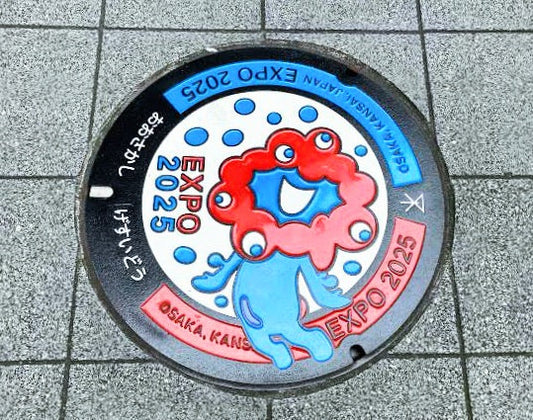
Attracting Visitors from the Kansai Expo to Kyushu
The Kansai Expo has officially begun. Over the next six months, the event is expected to draw approximately 3.5 million visitors from overseas. This means that more than 500,000 new...
Attracting Visitors from the Kansai Expo to Kyushu
The Kansai Expo has officially begun. Over the next six months, the event is expected to draw approximately 3.5 million visitors from overseas. This means that more than 500,000 new...
-
A Journey Guided by DNA: Slow Travel in the Cou...
A Journey Guided by DNA: Slow Travel in the Countryside for Spring
A Journey Guided by DNA: Slow Travel in the Cou...
A Journey Guided by DNA: Slow Travel in the Countryside for Spring
Customer Review
Silence amidst the hustle and bustle ★★★★★
Travel Design made me realize that there was such an interesting teahouse in a corner that I always passed by on my way home from business.
A space and time to take a breather amidst the hustle and bustle. I've been drinking tea since elementary school, and I was deeply moved by the delicate flavor of the Yame tea casually displayed in the storefront.
Beautiful shrine ★★★★★
We had a great time visiting Dazaifu, which is a stunning place surrounded by old plum trees and water. We had a bite to eat at the waterside restaurant and visited the historic shrine, which was beautiful and surrounded by lots of meandering paths for interesting walks. Would highly recommend.
Visiting Mingei Village ★★★★
I visited Ontayaki Village for the first time. It's a small village nestled in the mountains, about 20 minutes north of Hita Interchange by car. When Yanagi Muneyoshi, the founder of the folk art movement that brought the wonders of Ontayaki to the world, visited the village in 1931, he apparently traveled "about four ri" along a "narrow road impassable to cars" to reach the village (Yanagi Muneyoshi, Folk Art Travelogue, "Sarayama of Hita") (Iwanami Bunko). Feeling the passage of time, I got out of my car and stepped into the village. However, as I walked, I heard the sound of the waterwheels pounding the clay in the silence of the river, and saw the smoke rising from the chimneys of the climbing kilns lining both sides of the road. I felt a strange sense of time standing still.
At the top of the road, we entered the Ontayaki Pottery Museum (free of charge). Exhibits and videos introduce the history, characteristics, typical techniques, and production processes of Ontayaki. It's a well-designed museum. It's unlikely anyone would be able to pronounce Onta as "Onta" at first glance. However, I'd known about Ontayaki for quite some time. My parents had a large plate about 50 cm in diameter, and I'd heard it was an Ontayaki dish. This plate, now in my home, features numerous unique bands of patterns radiating from the center of the bottom to the edge. This is apparently one of Ontayaki's signature techniques, known as "tobikanna" (flying plane). The plate's light-colored base is accented with a subtle green glaze, applied from the edge to the bottom, creating a beautiful color contrast. The glaze appears to be made using an ancient technique using copper and salt.
On the way back, we visited Gallery Rokumeian, located near the village. The gallery displays a wide variety of pottery, many of which are reasonably priced. It is reminiscent of how for over 300 years, the village's potters have preserved traditional techniques while continuing to create a variety of vessels to meet the everyday needs of the people who lived in that era. The large plate mentioned above was likely made for special occasions. While picking up the pottery in the gallery, we were able to hear many fascinating stories about Onta ware from the talkative shop owner.
I had a very fulfilling time during this visit, and I hope to find an opportunity to visit the village again.
Stunning private tour★★★★★
The site tour, including a visit to the pottery kiln of the 14th Tarouemon Nakazato located in Karatsu, Saga, was an absolutely rare and unforgettable experience. Missing this place when you visiting Fukuoka would be a huge loss.
In Fukuoka City, I also had a wicked time visiting puppet designer Hiromine Nakamura's gallery, the Fukuoka Art Museum, and the Fukuoka City Museum. I personally think you can't talk about Fukuoka without going to the City Museum.
Thank you so much for taking care of me these past three days. This site's service offers awesome good value.
Just a tip for those heading to the Nakazato master's site tour excluding winter – I highly recommend bringing insect repellent spray!
An Amazing Private Experience!★★★★★
It was an incredible experience that allowed me to feel Mr. Saza's deep passion for tea and tea utensils. As a wonderful beginner, I appreciated how clearly everything was explained, and the time flew by. The atmosphere was relaxed and welcoming, making it easy to enjoy. Whether you're completely new to tea or have no prior knowledge, anyone with even a slight interest in tea will have a time!
Full of highlights★★★★
The son of an acquaintance of mine will be taking his junior high school entrance exam next spring, so we went to Dazaifu, where Sugawara no Michizane, known as the god of learning, is enshrined, to receive a talisman to pray for success, and Mr. Yanagi suddenly offered to guide us on a short trip.
There's so much to see!
First, we visited the ruins of the Dazaifu government office in the western capital, which also served as a defense against foreign enemies. Only foundation stones remain today, and no buildings remain, but the remains of the ancient capital nestled in the mountainside allow us to imagine what it was like back then.
The approach to Tenmangu Shrine is lined with shops selling the famous Umegae mochi. They are all located in old buildings, and unlike the typical tourist-filled approach to the shrine, they have a calm and refined atmosphere.
The temporary hall, which was erected in front of the main hall for a limited period of three years, was designed by Sou Fujimoto, and the sight of trees growing on the roof is a mysterious sight.
There are museums and history halls both inside and outside the shrine, so it's impossible to see everything in a short time. That's why I gave it four stars, but if my friend comes to visit next spring to give me a thank you, I'll give it five stars (lol).
Traditional culture adapted to the times ★★★★★
The works, which do not simply represent the traditional craftsmanship but instead adapt it to the sensibilities of the times, are simply wonderful and venture into the realm of contemporary art.
You can learn about the history of the successive generations of Nakazato Tarouemon ★★★★
This was my first visit to Nakazato Tarouemon Pottery Studio, but I was able to spend a relaxing time there, as if time had stopped.
It was great to be able to see so many historical works that embody the idea of free expression.
Sea and Island Shrines ★★★★★
I visited for the first time with a friend from Tokyo. We toured the main shrine and Takamiya Shrine at Hetsumiya Shrine on the mainland. It was a scorching hot day, but the sea breeze was pleasant. I had heard that there's a sacred treasure museum housing 80,000 national treasures, but I skipped it and headed instead to Oshima Island at Nakatsumiya by ferry. I'd seen footage of Oshima on TV once. We had lunch at a fisherman's restaurant and were given a ride by a local taxi. Okinoshima is said to be inhabited by gods, and Oshima apparently plays a role in protecting it. Apparently, Okinoshima can be seen from the worship site on a clear day. I was surprised to hear that the Baltic Fleet fought near Oshima during the Russo-Japanese War. I bought some summer mandarins, packed with the power of Oshima, as a souvenir.
Hakata DNA ★★★★★
On this tour, we visited Kushida Shrine and Jotenji Temple, and were able to reflect on the history of Hakata through the Gion Yamakasa.
Like Kyoto's Gion Festival, Hakata's Gion Yamakasa is a festival held to pray for the elimination of epidemics, but why are the two festivals, both named after Gion, so different in format?
The prevailing theory is that the Gion Yamakasa festival originated in 1241 when the founder of Jotenji Temple, which was built with the support of merchants from Song China, rode on a portable shrine and sprinkled holy water over the town to pray for the elimination of epidemics. This is an interesting example, as it clearly illustrates the uniqueness of Hakata as a commercial city that served as a gateway to the continent.
On this tour, we were allowed inside Jotenji Temple, which is normally off-limits, and were shown the founder's mikoshi, which still exists today. The founder's mikoshi is simple, while the mountain at Kushida Shrine is creative and magnificent. As we gazed upon the abbot's chambers from the veranda, we reflected on the development of the commercial city of Hakata, which lies between the two, and the development of festivals held by the townspeople.
Hakata has the flexibility to accept new things and the creativity to develop its own unique style. The city is home to many fashionable people and artists. The Gion Yamakasa of today is perhaps a symbol of Hakata's DNA.
Why do people show their buttocks during the Gion Yamakasa?
This makes sense if you think of it as a stylish expression that shows the sophistication of the Hakata style.